Integrating mind and body into medicine

It is exciting to see the medical community steadily moving towards a well-rounded, holistic approach to health care.

Dr. Herbert Benson is a great example. He heads the Benson-Henry Institute for Mind Body Medicine at Massachusetts General Hospital. Benson and his institute are working to integrate mind/body medicine into all areas of health care.

Benson sees health care as a “three-legged stool”:  one leg is drugs, another being surgical procedures, and the third as self-care or mind/body medicine which he classifies as the following:

The relaxation response (ways to de-stress, such as meditation)

Positive coping (cognitive behavioral therapy)

Physical activity

Nutrition

Social support

What’s great about the Benson Institute is not only are they promoting stress management for patients, but are educating doctors and health care professionals on how to integrate mind/body medicine into their practices, rather than just offering the text-book drugs and surgical procedures.

A quote from their own site states:

Primary care physicians often are taxed by patient complaints that do not seem to have a clear etiology, nor do the patients improve despite good medications and expensive procedures. Current studies show that stress or distress may have a significant effect on the onset, the course, and the management of many, if not all, diseases. Understanding a patient’s underlying stress physiology and coping mechanisms may enable physicians to better understand various clinical disorders and treat their manifested symptoms. -Benson-Henry Institute

Dr. Benson’s most recent book: Relaxation Revolution: Enhancing Your Personal Health Through the Science and Genetics of Mind Body Healing is now available.

You can hear an interview with Dr. Benson on the Diane Rhames Show, broadcast earlier today.

The changing shape of the ideal body

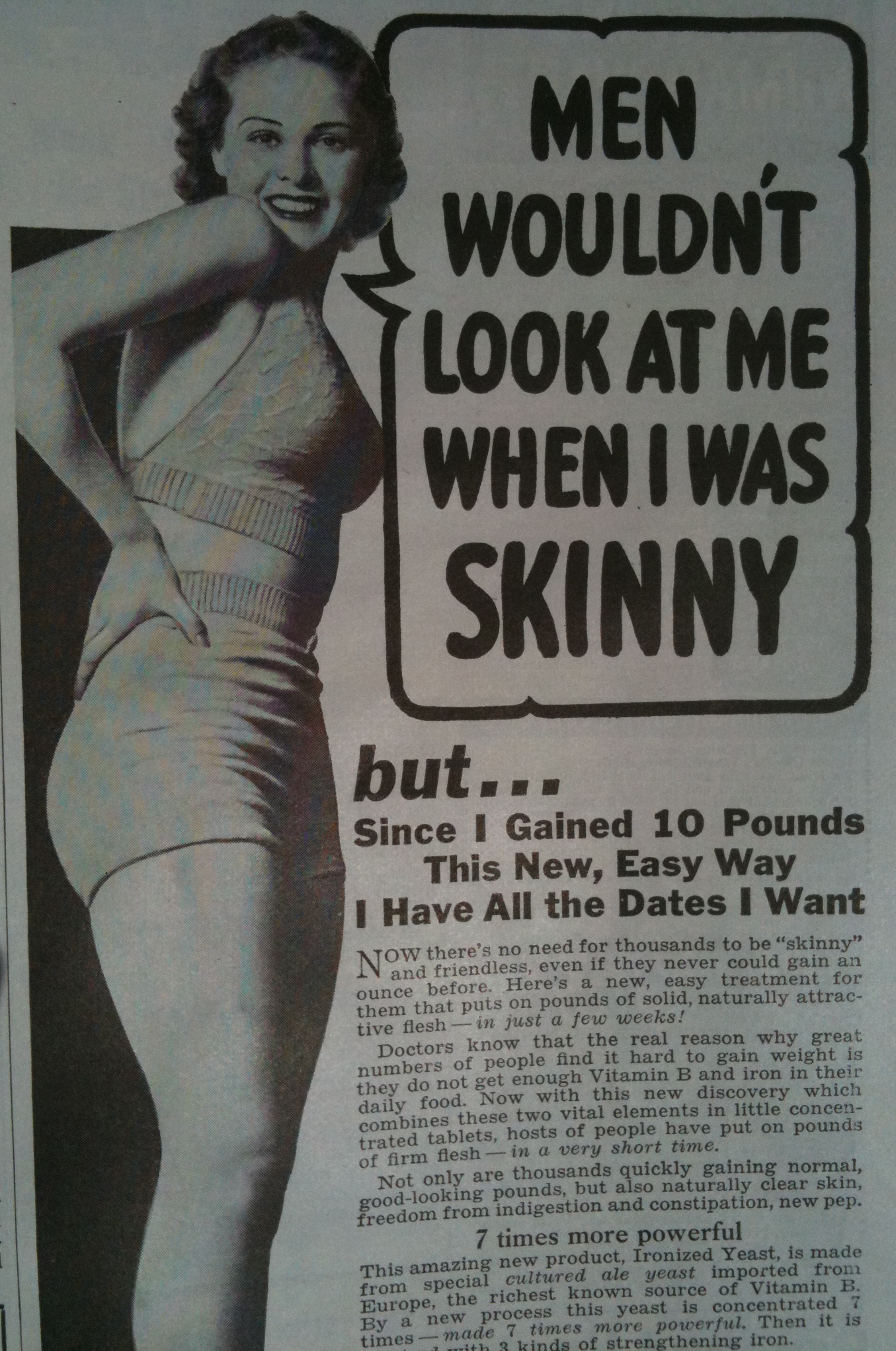
A 1935 ad reminds us it wasn’t so long ago that “skinny” was undesirable.

Our first reaction to the above ad is shock and horror.

How could anyone fall for this ?

But then, it is only fair to question…how could anyone fall for this?

Same worries, different times. The ideal feminine physique is ultimately defined by what we eat as a society at large. Let’s go on a time traveling adventure to witness the ongoing evolution of the beautiful body.

Start your flex capacitors…

It’s 1935.  The country is in the grip of the great depression. Meat is expensive, and produce, if it isn’t canned from the year before, comes from whatever is in season. Starchy, high fiber foods are added to every meal enhancing the feeling of fullness and staving off hunger. Sugar is a rare extravagance. Some are lucky enough to afford an annual sweet for Christmas, although many look forward to receiving the exotic gift of an orange on their pillow Christmas eve.

A curvy figure is the epitome of health. It equates to vitality, wealth, sexuality, and the ability to bear healthy children. Aphrodite incarnate.

Now time travel to 2010. Oh. Hold up. We are already there. In the past 100 years we have seen farm subsidies on corn and soy commodities, WWII, the boon of the 1950s, and better living through chemistry – which introduced chemically enhanced flavor to food while keeping it fresh longer, like high fructose corn syrup, partially hydrogenated things and msg…just to name the greatest hits.

Currently we are in the midst of another depression. Fresh fruits and vegetables, and local, organically raised meats are expensive. Wild fish prices continue to rise. Chemicals, new technologies, and processes make packaged food readily available and inexpensive.  So many chemicals are found in these inexpensive packaged foods, that often there is no “food” left at all.  As a nation, most of what we eat contains sugar. All things considered, it’s a rather bizarre obesity epidemic created in the US where often citizens are simultaneously overweight and malnourished.

Now, in 2010, aphrodite looks something like this:

Being skinny now embodies a certain attitude towards health. Skinny now equates to health, energy, financial success,  happiness, sexuality, and youth. It says, “I have time to exercise and take care of myself.”

This is not to be a comment on whether it is right or wrong, just that it is. Standards of beauty have been alive and well in humanity since the dawn of time. We are instinctively hardwired to aspire to a certain ideal, whatever it may be at that time.

Societal ideals will continue to exist. Seeing beyond the cultural ideal takes strength and vision, but it also coincides with our favorite approach to health  – the moderate one.


You are really getting on my Sciatic Nerve.

Does your back make you feel like this?

Back pain universally blows. It destroys postures, mental states, and days all around the world.

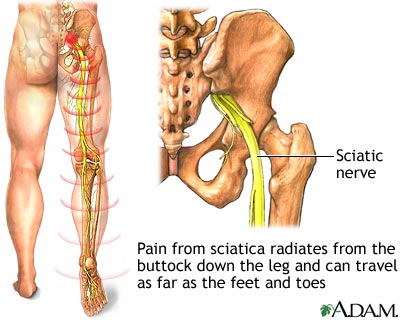
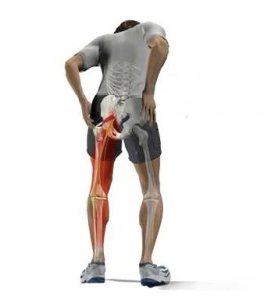
Sciatica is a subset of back pain mostly felt in the legs. The sciatic nerve is a long nerve that goes through the spine, separating down into the legs and ending in the feet.  Sciatica often occurs when something close to the sciatic nerve impinges upon it. The muscles around the nerve, in an attempt to protect it, seize up causing sharp, shooting pain or numbness through the buttocks and the back of the leg. Muscle atrophy can result from the stress of seizing up.

The sciatic nerve

Sciatica and back pain can attack anyone at anytime. A young athletic person with muscular imbalances is as likely to feel back pain as an older person with a sedentary lifestyle.

If ignored, sciatica and back pain often gets worse. With an acute onset of sciatica at 25, I know. Without proper care, I was forced to lay on the floor for a week, unable to sit or stand for long. My leg would buckle underneath me, and even as the pain lessened, I could barely stand for more than an hour or two at a time. It took a year of constant work to become pain free. That year was crucial for understanding how to care my body and preventing back problems for years to come.
Every body is different. Back problems are relative to the individual. Proper core strength, self-knowledge and self-care are golden tickets to recovery.

Below are suggestions to help ease sciatica, but always consult your physician regarding any prolonged back pain.

#1. R-I-C-E – It’s the physical therapy stand-by for acute pain. Practiced everywhere from the school nurse’s office to NBA courts.
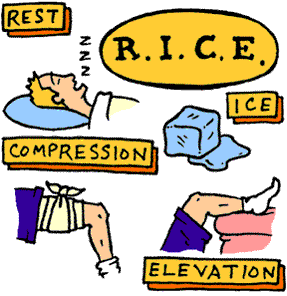
REST– After an acute back injury, rest is the best medicine. Allow the spine and muscles to relax and to heal on their own terms. Listen to your body.

ICE– When in doubt, go with ice to help relieve inflammation and numb the pain. My favorite ice pack is a super large bag of corn or peas from the grocer, just don’t eat it later.

COMPRESSION– Wearing a back brace or wrapping an ace bandage in a corset-like fashion can temporarily aid in supporting the spine and muscle strain.

ELEVATION – Rest flat on the back, allowing the legs to be propped up at an ELEVATED angle. Either with a pillow below the knees or lying on the floor with calves draped on the couch or a chair.

#2. Stretch out the spasm.

Stretching out cramping muscles provides temporary relief. Proper stretching is crucial. Do not stretch the leg past a 90 degree angle, causing the low back to curl forward or twist. While this might feel good at the time, it can make the pain worse later by straining the low back.  Keep the spine neutral while stretching the legs. Again, when stretching the leg do not allow the low back to round or tuck under.

hamstring stretch. turn the leg in and out

Piriformis stretch: This stretch releases the muscle spasm temporarily around part of the sciatic nerve.  Lie on your back. Cross one foot over the opposite thigh. Pull the thigh in towards your chest. It’s very important to keep your tailbone on the floor (do not allow it to curl up off the floor).

Piriformis stretch

#3. Build a better core

Begin to work on slow, controlled movements that allow you to find your core muscles. No crunches or sit ups. Without proper awareness these movement can create further muscular imbalance and continued back pain. I recommend trying the dead bug exercise, which is explained here.

dead bug exercise

#4. McKenzie Exercises

Physical therapists either approve or condemn this method. There seems to be no in between. After 6 months of pain, the McKenzie extension exercises helped my own pain and strengthen my back muscles.

Named after a physical therapist in New Zealand, McKenzie exercises are primarily extension (arching) exercises that could help reduce the symptoms of herniated disc by reducing pressure on a nerve root. For acute pain, the McKenzie exercises should be done frequently, at least once every two hours. For more information, you can buy the book, or check out their website. Although many back and sciatica problems could be helped by these exercises, it is not for everybody. Consult a therapist or a doctor to determine if this method is for you.

#5. Get moving with strength and balance

Once back pain is under control, it’s time to consider exercises to make sure the pain stays away. Understand your body’s muscular balance and how it works: Which muscles need to be strengthened and which need to be stretched? Which are overdeveloped or strained? A strong core includes whole body balance, not just the front abdominal wall. The guidance of a professional Pilates instructor, physical therapist, or movement therapist is highly recommended.  Ideas for low impact exercise can include:

walking

elliptical

swimming

pilates (with a certified instructor, preferably one with a rehabilitation background)

low impact aerobics

dance

…really, just get moving! Finding an enjoyable form of exercise is key to lasting strength. Regular activity, with balanced trunk strength, prevents back pain from recurring, allowing you to stay mobile and strong for many years to come.


Tobacco, Bowling, and Vintage Home Gyms

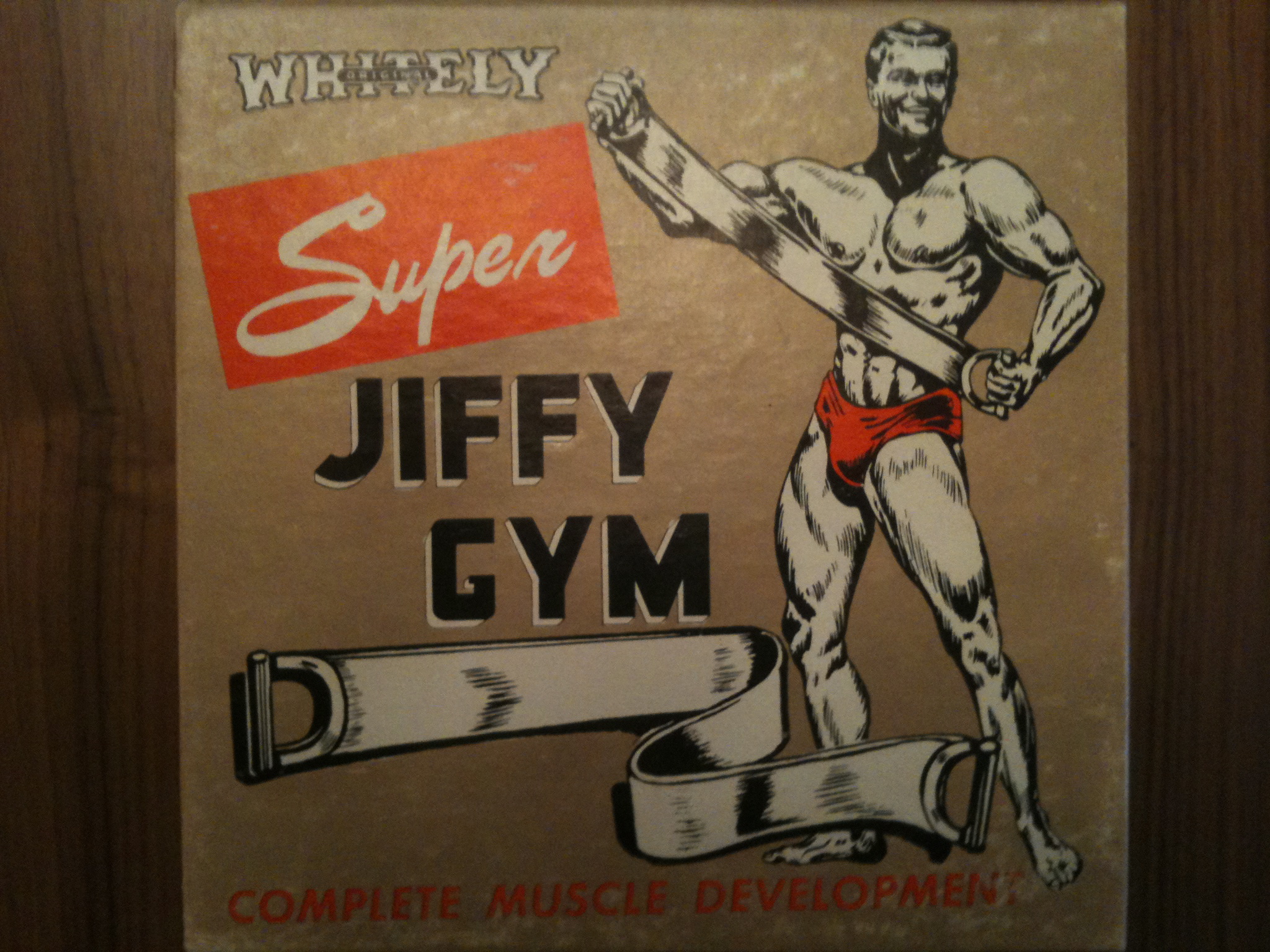
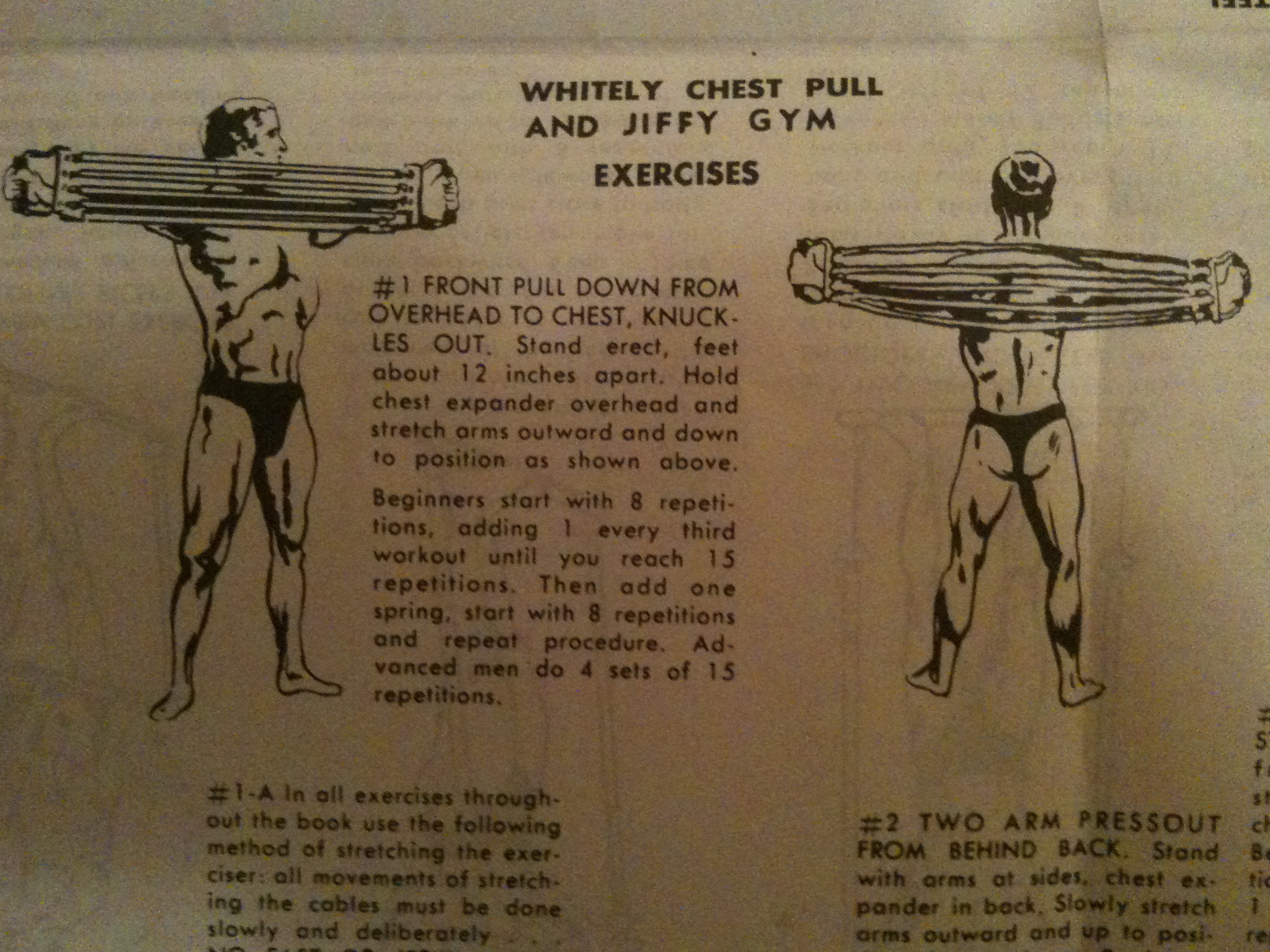
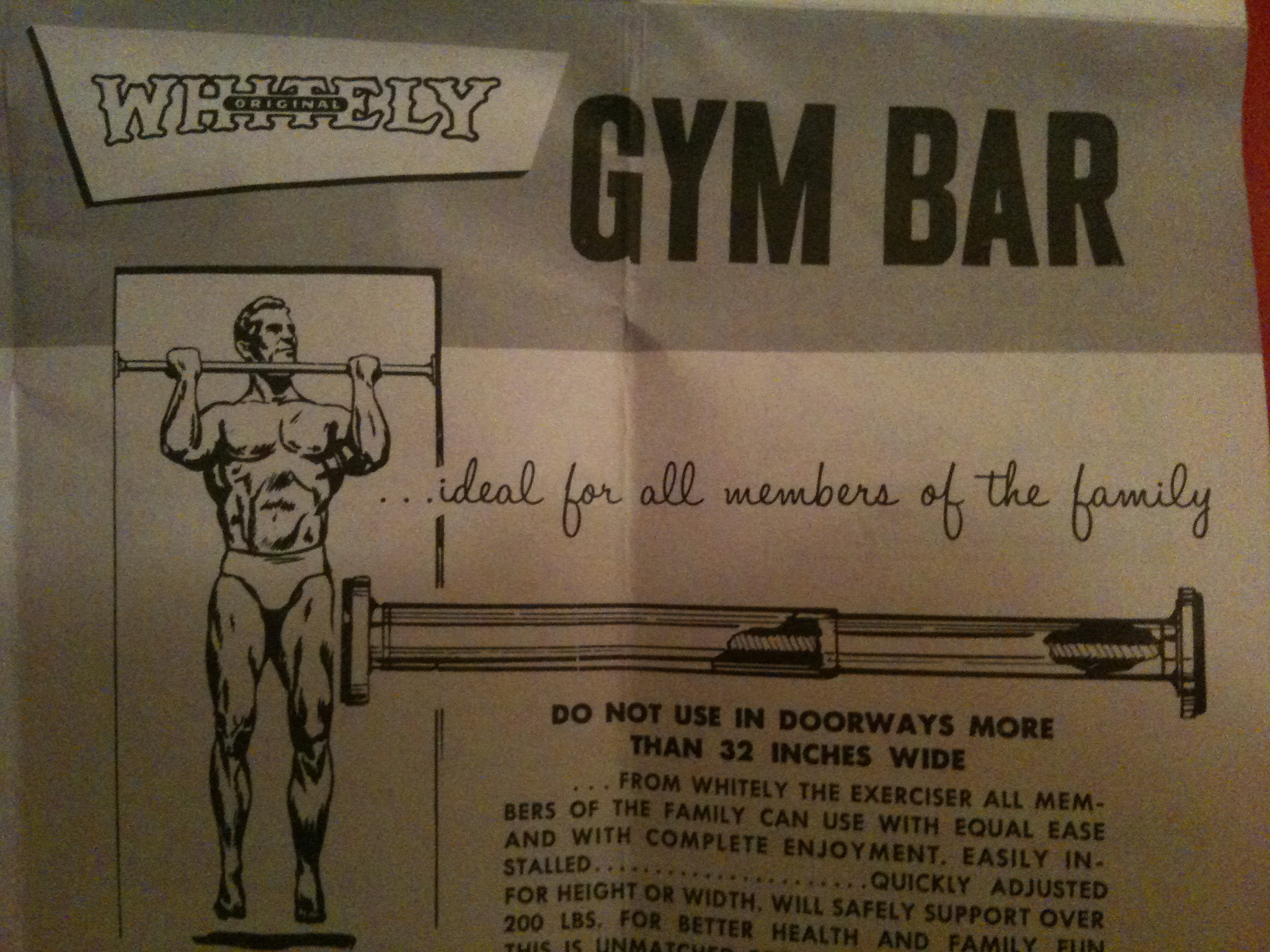
While browsing local vintage boutique Retro 101, I stumbled upon packaging that would catch anyone’s eye – manly muscles in a contradictory happy, yet formidable pose. Whatever was in the box, it had to be mine. So goes the power of marketing. Mad Men, eat your heart out.

The Whitely Super Jiffy Gym looked promising. Best guess was with the invention of plastics, came the Super Jiffy Gym – a simplified version of the springed “chest pull” popularized by cartoons…you know the one that Tom and Jerry get tangled up in. Or was it Daffy Duck…

Now I too, could create an array of perfect Grecian poses with my new, vintage Jiffy Gym. Were the trunks required too?


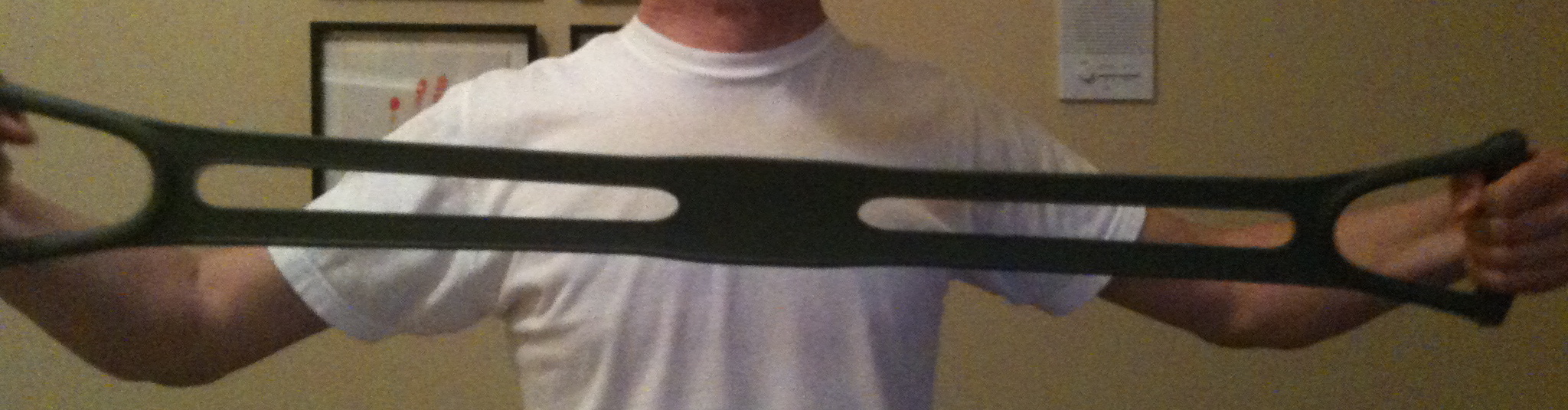
But once taken out of the box, I could barely move it. It wasn’t quite the elastic band you might get from the physical therapist. No. The tension was somewhere between a strap to hold elephants at bay and a rock.

Verdict? The Jiffy Gym was a dud. Could use it to hang plants. The packaging was mesmerizing, however and a little research was in order. It appears Whitely Gyms offered a large array of classic home gym equipment throughout the 1960’s and early 70’s, bizarre precursors to the fitness props and home gym toys of today.

Turns out, Whitely Gyms of Hackensack, NJ, was owned by AMF Incorporated. AMF Incorporated was founded in 1900 New York, as the American Machine & Foundry Company Inc. The company manufactured automated machines for the tobacco industry.

AMF, Inc. expanded the automated machinery into all kinds of  industries, including the one they would ultimately be known for, the automatic pin-spotter. Yes, as in bowling. The war delayed the introduction of  the pinspotter until the late 1950’s when it revolutionized tenpin bowling and touched off a boom in the sport. Kingpin was born.

Involvement with bowling led AMF into a broad range of sports and fitness equipment during the 60’s and 70’s including; tennis racquets and skis, golf clubs, inflatable balls, scuba gear, (my Jiffy Gym) and other recreational products such as snowmobiles, bicycles, yachts and even Harley Davidson motor cycles.

From jump ropes, gym bars, bands, balls and pulley trainers, AMF’s Whitley Company offered it all.  The funny thing is, these same gym gadgets are constantly being reinvented every decade, purporting to be new, safer, more convenient, modern, and perhaps greener.

The Whitely line of home gym equipment quietly went away in the 70’s, only to be rediscovered now and again in vintage shops and yard sales by cultural fitness anthropologist such as myself. The Jiffy Gym is a shining reminder of how little has changed in American fitness, not to mention the influential power of good advertising. Afterall, I did buy it.


Marketing With Food Dares


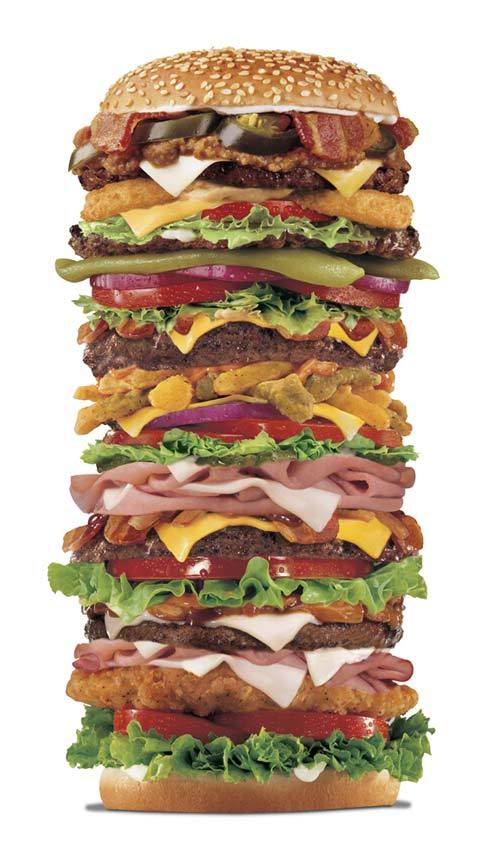
Some people consider eating chicken feet and head cheese a dare, but in the US it’s not so much about oddities as it is about going big. With popular shows like Man vs. Food and the recent onslaught of fast food dares, it becomes obvious the recipe for success comes down to extreme comfort food, extreme Americana, and extreme calories…all in the name of entertainment, of course.

Perfect example: The Double Down

KFC Double Down

KFC’s  testoterone alluring monstrosity got the attention they had intended, making headlines all over by taking two pieces of fried chicken and using them to sandwich two slices of Monterey Jack and pepper jack cheese, two slices of bacon and a special sauce. An LA times blog says it has 800 calories 46 grams of fat, while the Washington Post says only 540 calories with 32 grams of fat. -90 calories lighter than McDonald’s Premium Crispy Chicken Club Sandwich. It contains 1,380 milligrams of sodium while 1500 a day or less is recommended.

Carl's Jr Footlong Burger

Most recent to the extreme caloric scene is the Carl’s Jr. hamburger footlong. That’s right. 8 patties of meat and probably 1500 calories. Nutritional information is not yet available.

Friendly's Grilled Cheese Burger Melt

Stephen Colbert recently touted the news of Friendly’s new grilled cheese burger melt. At 1500 calories (seems to be the standard) and 2090mg of sodium, I think no one can express their excitement over this sandwich like Colbert can. I urge you to check out his food thoughts on the grilled cheese burger melt here.

When did this madness begin?

In recent memory, the team making calories work for them in the biggest way was the Gateway Grizzlies, a minor league baseball team in Southern Illinois, just outside of St. Louis, MO.  The Grizzlies, known more for their death-defying ballpark food than their hitting, touched off the craze in 2006 by adding a $4.50 donut burger to the concession lineup. Going the extra mile, the Grizzlies deep-fried their glazed donut before slapping it on the bacon cheeseburger. Attendance soared.

But wait! It’s just keeps getting better! Moving the trend ever forward, the marketing gurus for the Grizzlies now sell a new gutbuster made of 1.6 pounds of meat topped with salsa, sour cream, chili and Fritos. Cost: $20 and 4,889 calories.

I’m gonna stick with chicken feet. A 60 calorie dare that’s still hard to swallow…mainly you just chew.

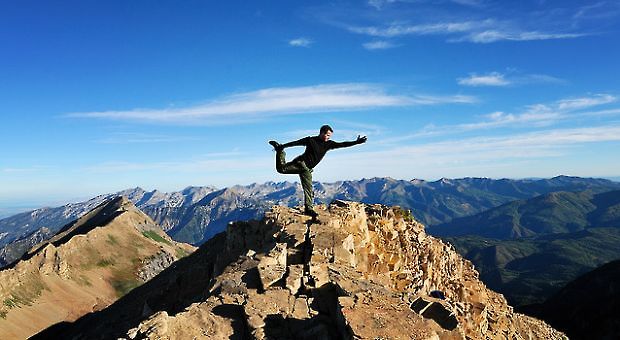
Meditation. It’s not just for Sissies anymore.

(Watch out phone viewers…quite a few videos below)

Yeah that’s right. Meditation is being claimed by the resistance movement. Quiet strength and mind body centering is attacking the establishment…silently.

As the benefits of meditation become more widely known, its new age stigma is being shed for a reputation of focus, skill and all around quiet bad ass…ness.

Breathe deep, growl low.

Take the Dharma Punx movement.

Noah Levine, a former druggie and multiple-time convict, learned how to meditate in jail and carried it out to the disenchanted masses. Levine’s meditation movement is gaining momentum among the disillusioned seeking something more from life than drugs, sex, MSNBC, and garage bands.

Although the Dharma Punx are bringing Buddhist philosophy to the streets, it must be mentioned here:  The Wu Tang Clan was first.

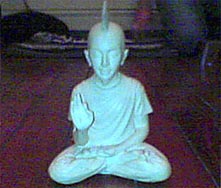
While Wu Tang’s philosophical references began with martial arts films, their inspiration validly comes from yet another, older, bad ass group – the Shaolin Monks. There is nothing wimpy about this club. Meditation is their way of life, creating focus, discipline and a centeredness from which they move. I can safely say a 60 year old man able to meditate while balancing one finger…is hardcore.

While meditating on your head might not be in the cards, there is still much to learn from their way of life. For example, here in this video are the simplest elements needed to meditate.

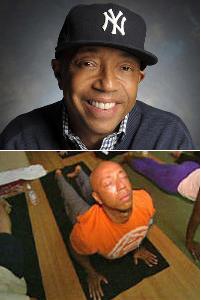
Russell Simmons

Of course, meditation has its celebrity fans. Tiger, Russell Simmons, Sting. Hands down, my personal favorite is David Lynch. Here is a guy who goes fishing into the human psyche, catching all the dichotomies (good and evil, black and white, etc) and exploring them in wild nonlinear, multidimensional ways. Doing things like this:

…while meditating twice a day for the past 35 years. Lynch is one of the most prolific artists out there today. Disturbing, beautiful and compelling. Taking concepts and running with them in various directions. Lynch is a badazzzz.

In the end I defer to The Man, Clint Eastwood. Yup, Mr. Eastwood has been practicing meditation everyday since the 1970’s.

So I gotta ask, Do you feel lucky Punk? Well do ya?

If not, perhaps a little mediation would help….

(I know. Oh so cheesy cheese, but hard to resist.)

Here are a few links for more information:

2009 Scienceline Article

June 2010 – Diane Rehms Show on the power of meditation

The NIH overview on Meditation

ACL Pre/Post Surgery Knee Exercises

Torn ACLs and knee injuries are surprisingly common, and a prime example of how muscular imbalances create wear on the joints. Proper awareness, balance, and strength training are key to preventing and rehabbing any and all injuries… knees included.

For a knee injury, it is important to build the entire leg: maintain quad strength, build stronger hamstrings, and focus on balanced strength in the hips. Pay attention to proper traction and alignment of the ankle, knee and hip as you exercise – in other words, make sure everything is lining up. You can easily do a movement, but without proper alignment of the joints, muscular imbalances can be created, resulting in continued strain.   The best way to build overall strength and better alignment is to incorporate some form of balance into your exercises. Balancing coerces lesser developed muscles to engage, as well as to kick in a little core support.

Your doctor or PT will probably gave you some similar movements, like squats, leg presses, and lunges, but my recommendation would be to try to incorporate an element of balance with each:

Wall Squats with a balance ball behind the back – Angle out the legs and work your way to bringing them under your hips. Pay attention that the knee lines up with the center of your foot. Don’t let the knees extend into flexion past the toes, or a 90 degree angle. Hold the squat for 30 seconds.

Single leg wall squats – This is a challenge. Be careful with these.


Standing on one foot Hip hikes
– Using a yoga block, encourage balance work on the standing leg. allow the opposing leg to tap the floor and lift up. Works the hips and standing leg stability.


Balance on one foot
– Balance on an upside down bosu ball, foam roller, or a wobble board at the gym
Practice balance on this for 30 seconds to 2 minutes at a time.


Lunges with bosu ball – You can flip the bosu either way.  Arm movements are optional.  Here’s an alternative with the Bosu Ball flipped.

Swimming over balance ball – Lying over the ball. Core is centered. Opposing hand and leg lift, other two remain in contact with the floor. Hold for 5-10 seconds each. Keep both arm and leg completely straight, hold and balance. Switch.

Hamstring curl, pelvic lift series on balance ball or bosu ball – Lying on the floor. Soles of the feet flat on the ball (don’t hang in just heels), curl hips up towards the ceiling and roll back down through the spine. Keep ball stable. Can do with legs together (harder) or shoulder width apart. Curl up and down 10 – 20 times.
1. Next progression: you can keep hips elevated and carefully push the ball out and in. Don’t move hips as you move legs. Be careful with this one.
2. Next progression: you can do single leg pelvis lifts, with opposing leg stretched upward towards the ceiling – again, be careful with this one.

Leg presses on the gym equip. Don’t just power through. Keep body aligned and lengthen spine and low back away from the leg movement.


Foam Roller IT band massage If you have a foam roller at the gym, you might want to roll out the outside of the leg. Actually, investing in a roller for home is a wise purchase. There are a multitude of uses and benefits. Rolling out the IT band can be painful, depending on how tense is. The roller helps release hip and leg tension, while reducing strain on the knee.

Psst! Sneak in Some Fitness Today

Just like with saving money, or cutting calories, the little things count. I believe people receive more benefits doing small things for themselves throughout the day than dedicating an hour to the treadmill. Little breaks and movements create appreciation and respect for our bodies, helping both the body and the mind. I encourage you to find your own creative ways to keep things moving. Here are a few simple starters.

Idea  #1.

Walk when you can. Park far away from the entrance and enjoy a mini-leisurely walk to the store.  As a gift, give yourself an extra 5 minutes of walking time to get where you are going. Just a few extra steps and deep breaths calm the mind in a surprising way.

Idea #2.

Stairs. It’s the big “no-duh”. Take the stairs instead of the elevator. Draw your body weight up through the middle of the body, lifting weight away from your knees as you go up and down. Be aware of taking even breaths.

Ideas #3.

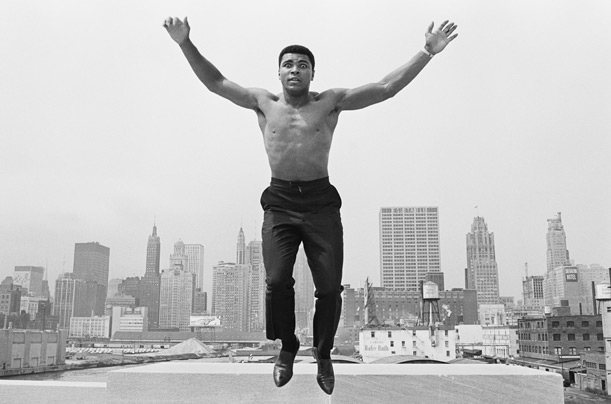
Jump or bounce around. Like Muhammad-Ali getting pumped up for the fight. Get up from your desk and just jump up and down a bit. Shake out your hands and stretch your neck. Get the blood flowing and move the computer and work stress out of you body. 30 seconds to a minute is all it takes.

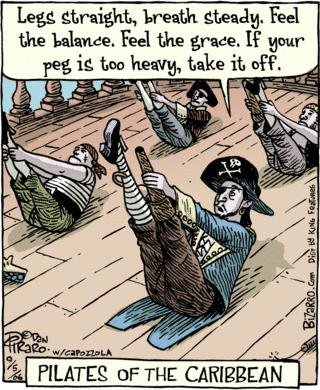
Pilates of the Caribbean

Thanks to Michael Capozzola for creating and Ben Maher for passing it on. Bay Area keeping it real…funny.

Working Overtime May Be Killing You

Nobody enjoys working overtime, and here is the new best excuse not to: Working overtime linked to higher risk of heart disease.

The European Heart Journal studied 6000 British civil servants and followed them for 11 years.  They found that working an extra 3-4 hours a day is associated with increased coronary heart disease.  The researchers controlled and adjusted for lifestyle, cardiac risk factors and other factors that would skew the results and still found that people who worked 3-4 extra hours a day had a 60% increase in risk for heart disease.

These results were for both women and men (ages 39-61). Other risk factors like smoking, elevated lipids, diabetes made no difference in the results.

(Found at http://everythinghealth.net/, posted by Dr. Toni Brayer)