Tag Archives: research and knowledge

Quote of the Day

I have always had a number of parts lined up in case the muse failed. A lepidopterist exploring fabulous jungles came first. Then there was the chess grand master, then the tennis ace with an unreturnable service, then the goalie saving a historical shot, and finally, finally, the author of a pile of unknown writings – Pale Fire, Lolita, Ada – that my heirs discover and publish.

Vladimir Nabokov in a 1977 BBC interview

Magic Weight Loss and Brain Power Tips

Yeah, No.

Not really. No magic here. Mentos and diet cola looks pretty magical too, but it’s not. If anyone offers you magic solutions to health, you might as well be buying the Brooklyn Bridge. Has the price gone down on it yet?

There are only habits. Stopping old rituals and starting new routines. Doesn’t that sound daunting? It really doesn’t have to be. Start small. Go slow. Keep steady. Yeah, not glamorous, but it works.

Think Slow and Steady


Invest 10 minutes everyday in a new habit. No more.

Below are a few opportunities to start making changes. Pick only one. Who we kidding, we all want to do more. Go ahead and try a few, but stick to one. If you force too much too soon seeking immediate results, you will crash and burn. If you can keep that one new habit for a 2 months, then perhaps add another. This slow steady method goes a long way in helping maintain better mental and physical health.

  • Just 10 minutes of exercise first thing in the morning can increase your metabolic rate for the rest of the day.
  • Up your consumption of water throughout the day. Drink sugary beverages sparingly.  Be fully hydrated. This can increase your metabolic rate.
  • Eat more fruits and vegetables. Big ugh, I know. Make it more interesting. Go seasonal. Get to know your local farmers. Frequent the farmers market or local grocer. Ask how they like to prepare the harvests of the season. My personal favorite way to eat most veggies is a quick sautee in olive oil, garlic, salt and pepper. Bam.

  • Eat more fats. The good kind. As in HDL, not LDL.  Latest research suggest that cholesterol lowering foods such as avocados, almonds, olive oil, soy beans, garlic, shiitake mushrooms, chili peppers, oat bran, beans (kidney, pintos, black, navy, etc.), onions, fatty fish, and flax seed play a crucial role in lowering LDL and sometimes raising HDL levels. These foods fill you up and help your cholesterol stay healthy.
  • Drink Green Tea. This one is personal.  Although skeptical of touting weight loss benefits, green tea has been helpful in curbing sugar and nicotine cravings.  A little green tea after dinner helps in digestion and is a wonderful winter ritual rounding off dinner with a mandarin orange or two as dessert.
  • Journal 10 minutes a day. Huh? Yup. Get a notebook. Vent your anxieties, frustrations, write down your hopes, dreams. List three thing you are grateful for everyday. These little moments help clear the brain and make the rest of your day smoother, creating peace of mind and less stress.

Take your time and enjoy the process. As enticing as quick fix solutions can be, slow and steady habit shifts will keep the body and mind healthier throughout a lifetime.

Gratitude is Good for your Health

Time for a seasonally poignant post.

Exercise your gratitude muscles regularly, and you might find yourself healthier and happier.

•People with high blood pressure not only lower their blood pressure, but feel less hostile and are more likely quit smoking and lose weight when they practice gratitude. In one study, patients just called a research hotline once a week to report on the things that made them grateful.

•People who care for relatives with Alzheimer’s disease feel less stress and depression when they keep daily gratitude journals, listing the positive things in their lives.

•Those who maintain a thankful attitude through life appear to have lower risks of several disorders, including depression, phobias, bulimia and alcoholism.

•Most people can lift their mood simply by writing a letter of thanks to someone. Hand-deliver the letter, and the boost in happiness can last weeks or months.

USA Today

Need some help getting started?

Try starting a gratitude journal. Write down three things you are thankful for everyday. There is even a gratitude journal iphone app.

So once you’ve put the fork down, start working on the happiness of being thankful that your digestion is moving things along. Go from there.

Hmmm….Your brain needs the treadmill.

brain on treadmill 2

In the past month I’ve learned

1. that exercise won’t make me lose weight (according to the Article title in TIME)

2. and now it seems the treadmill makes me smarter.

Phy Ed piece in New York Times Sunday talk about the need for aerobic activity for the brain.

Pushing your body apparently stimulates dramatic blood flow changes creating new neurons and brain connections.

Makes sense. It’s often been said exercise could lift ones spirits, mood, and now cognitive abilities.

Just don’t get on the treadmill if you hate it.

There’s more to an aerobic workout than the treadmill.

A few ideas:

Running (outdoors)

Jump rope

tennis

swimming

dance

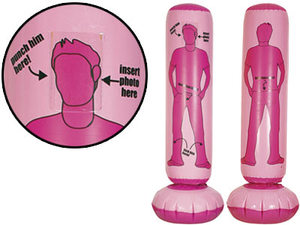
Or, get a punching bag, put some good music on, and knock the crap out of it. Very cathartic. Must mean the brain gets twice the benefit…

punching_bag

The Pelvic Debate – Spinal stability lying Down

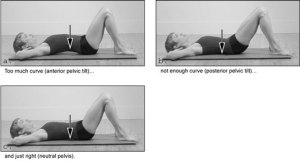
arched, tucked, and neutral pelvic positions

arched, tucked, and neutral pelvic positions

To Tuck or not to tuck? That is the question.

And just like for Hamlet, there is no easy answer. It’s all in your relation to gravity, what movement you are performing, and what kind of weaknesses and spinal posture you have right now.

When performing exercises on your back that require spinal stabilization –  keeping the back still while moving the arms and legs – it is important to learn how to maintain a neutral pelvis and spine. We want to strengthen the natural alignment without force.

To find neutral pelvis, first learn how to isolate and move the pelvic bones by doing pelvic tilts.

pelvic tilt

Lying on the back with knees bent, draw the pelvic bones inward towards your nose, pressing the low back into the floor and slightly lifting the tailbone off the floor. This is called tucking under. Next, go the opposite direction, creating a tunnel or arch with the low back by drawing the pelvic bones downward towards the knees, tailbone connects to floor. This is called arching.

Neutral pelvis is the happy medium between this range of motion. The front two pelvic bones are pointing upward towards the ceiling, most likely creating a slight arch in the low back.The tailbone and the back of the rib cage remain heavy on the floor. To engage the abdominals in this neutral pelvis, imaging trying to zip up the last bit of zipper on your tightest pair of pants! The muscles between the pelvic bones should sink down, but the bones themselves should not move.

(Refer to the picture at the top of the post)

Exercising supine (lying on your back) maintaining neutral pelvis will strengthen and stabilize the spine, allowing the arms and legs to move around freely. Your abdominals gather towards the spine ( like a corset closing in on all sides of the waist, belly and back), but, don’t force down the belly by tucking under the pelvis. Often we confuse scooping the abdominals with tucking under the pelvis.  This will only create bad spinal stability habits in the long run, leading to overdeveloped hip flexor muscles, weak core, and an overstretched low back. The tuck under for stability when lying down will translate to a lordotic low back when standing, or what is called “sway back”.

image025fv3There are always exceptions to every rule. If your back is extremely weak or you have never exercised then modifications must be made. Prop up the pelvis with a small pillow or blanket roll to support weak back muscles when lying on the back. This elevation of the backside will create less pressure directly on the spine and allow you to feel the core muscles. In this case, DO work on keeping the low back heavy and the pelvis tucked under. Given the body’s change in relation to gravity and weakness of the muscles, this works best. As one gets stronger take the prop away and work in neutral pelvis.

Once you’ve found a neutral pelvis position, practice moving the arms and legs while maintaining the stable spinal column.

Look at the “dead bug” exercise in finding your fulcrum.

A good image to help create stabilization would be to imagine balancing a bowl of water ( or a glass of champagne, depending on your preference) on top of the pelvis, just below the navel and between the pelvic bones.

For a more difficult stability challenge, try balancing a tennis ball or golf ball on this same low point in the torso.

Good luck. Once you are able to maintain and understand a correct neutral position, it is surprising how fast one can strengthen their body from the center outward!


Mind Body Medicine: A Good Laugh

This is a good place to start on a Monday, the most unfunny day of the week.

Science, Art, Religion and various realms of knowledge are slowly melding back together under one roof….the human experience. What we instinctively do, is often for the betterment of humankind and ourselves. Take Laughter. And then take these families here, for example…

tavin-awesomeness-lr

p1080456-lr

Did you crack a smile?

Remember the old adage ” Laughter is the best medicine”?

Realizing this post bears a striking resemblance to mass fluff emails from well meaning relatives and coworkers.  Admit it. You’ve smiled at one of those emails before, even a little. At least one thing here should coerce a laugh, or at least create recognition to the benefit of having one.

…also keeping in mind a newly edited old adage “beauty, [and humor] is in the eye of the beholder”…

We live in such a cynical society. Just let go sometimes.

Laughter is a powerful antidote to stress, pain, and conflict. Nothing works faster or more dependably to bring your mind and body back into balance than a good laugh. Humor lightens your burdens, inspires hopes, connects you to others, and keeps you grounded, focused, and alert.

Shared laughter is one of the most effective tools for keeping relationships fresh and exciting. All emotional sharing builds strong and lasting relationship bonds, but sharing laughter and play adds joy, vitality, and resilience. And humor is a powerful and effective way to heal resentments, disagreements, and hurts. Laughter unites people during difficult times.

pie area

Using humor and laughter in relationships allows you to:

  • Be more spontaneous. Humor gets you out of your head and away from your troubles.
  • Let go of defensiveness. Laughter helps you forget judgments, criticisms, and doubts.
  • Release inhibitions. Your fear of holding back and holding on are set aside.
  • Express your true feelings. Deeply felt emotions are allowed to rise to the surface.
kniggits5hw

  • Laughter dissolves distressing emotions. You can’t feel anxious, angry, or sad when you’re laughing.
  • Laughter helps you relax and recharge. It reduces stress and increases energy, enabling you to stay focused and accomplish more.
  • Humor shifts perspective, allowing you to see situations in a more realistic, less threatening light. A humorous perspective creates psychological distance, which can help you avoid feeling overwhelmed.
  • Laughter relaxes the whole body. A good, hearty laugh relieves physical tension and stress, leaving your muscles relaxed for up to 45 minutes after.
  • Laughter boosts the immune system. Laughter decreases stress hormones and increases immune cells and infection-fighting antibodies, thus improving your resistance to disease.
  • Laughter triggers the release of endorphins, the body’s natural feel-good chemicals. Endorphins promote an overall sense of well-being and can even temporarily relieve pain.
  • Laughter protects the heart. Laughter improves the function of blood vessels and increases blood flow, which can help protect you against a heart attack and other cardiovascular problems.

OKAY ALREADY. So how do you start laughing more?

Funny Dog Costume

Laughter breeds creativity

  • Smile. Smiling is the beginning of laughter. Like laughter, it’s contagious. Pioneers in “laugh therapy,” find it’s possible to laugh without even experiencing a funny event. The same holds for smiling. When you look at someone or see something even mildly pleasing, practice smiling.
  • Count your blessings. Literally make a list. The simple act of considering the good things in your life will distance you from negative thoughts that are a barrier to humor and laughter. When in a state of sadness, we have further to travel to get to humor and laughter.
  • When you hear laughter, move toward it. Sometimes humor and laughter are private, a shared joke among a small group, but usually not. More often, people are very happy to share something funny because it gives them an opportunity to laugh again and feed off the humor you find in it. When you hear laughter, seek it out and ask, “What’s funny?”
  • Spend time with fun, playful people. These are people who laugh easily–both at themselves and at life’s absurdities–and who routinely find the humor in everyday events. Their playful point of view and laughter are contagious.
  • Bring humor into conversations. Ask people, “What’s the funniest thing that happened to you today? This week? In your life?”

blades-of-glory

  • Watch a funny movie or TV show.
  • Go to a comedy club.
  • Seek out funny people.
  • Share a good joke or a funny story.
  • Check out your bookstore’s humor section.
  • Host game night with friends.
  • Play with a pet.
  • Go to a “laughter yoga” class.
  • Goof around with children.
  • Do something silly.
  • Make time for fun activities (e.g. bowling, miniature golfing, karaoke).

To Find out more about Laughing Yoga.

Big+Laughing+Buddha+Taichung-1

Your mission, should you choose to accept it, is to go out of your way to have a hearty laugh at least once a day, preferably with someone else. Waka Waka!

storm troopers

storm troopers

Kind of funny, right?

Much of the bulleted information taken from Help Guide.org

Many of the awkward family photos from awkwardfamilyphotos.com

Several other photos were snagged from one of my favorite wordsmiths, Capitol J

Everyone Has a Story. What’s Yours?

garycoleman

I could tell you about the time Gary Coleman saved me from a night of tears, or how at age 6 I used to hang out with an elderly woman named Francis who (I think) ran a flower shop out of her garage, or how I managed to sell a comedy show ticket to Dr. Stephen Hawkins….but it’s more fun sometimes to listen. So, what’s your story? I know you have one….

Truth is stranger than fiction.

Nothing is truer. Life is fascinating, if not plain weird sometimes. We can learn so much from each other and unlock many a creative mind, if we just stop and listen to those around us.

Bur where to begin? A good start is looking to someone who keeps company with the strangest of truths…in various realms of reality…

Say, David Lynch, perhaps…

Lynch has sent a team out across the hidden cobwebbed corners of America in search of “true” American stories…underwhelming tales of hard work and struggles, dirty finger nails and well earned sighs as the screen door to the local bar slams behind…these stories are nostalgic before their time…these times have yet to be awarded a place, which Lynch is now beginning to clear.

I recommend meeting Barry in Fort Davis, TX to understand a good story from the wunderkammen of David Lynch.

A more national and interactive interview program is presented by Story Corps and sponsored by NPR and the Corporation for Public Broadcasting.  A brilliant interview project with a mission to honor and celebrate lives through listening. You can tell your own story, or interview someone else for the Story Corp Project. Truly every story is unique.  Here are 2 of my favorites, although there are so many great stories, just click on the pictures to hear their stories:

Ronald Ruiz at Story Corp

Ronald Ruiz at Story Corp

Don "Moses" Lerman

Don "Moses" Lerman

You don’t need a public project to start your storytelling adventures.Write your story down. Tell it to someone else. Or better yet, interview someone near you. Learn more about them just because you want to know. Listen. It is surprising what you can learn about others, and simultaneously, discover about yourself.

SunsetStoryteller12

UPDATE – Hardwired for Rhythm

abou-01-l

How fortuitous to make mention of the Music Instinct in yesterdays blog. Some of the best interviews in the documentary often came from the mouth and mind of Neurologist Oliver Sacks.

As it happened, Dr. Sacks made an appearance on, of all places, John Stewart’s the Daily Show last night. Glad to know John and I share similar interests…or at least the person who books his guests.

Promoting his Nova special Musical Minds, which airs TONIGHT on PBS. Check your local listings and set your DVR for a mind-blowing exploration on the plasticity of human brain and our instinctual connection to rhythm and music.

(Excerpt from pbs.org)

Can the power of music make the brain come alive? Throughout his career Dr. Oliver Sacks, neurologist and acclaimed author, whose book Awakenings was made into a Oscar-nominated feature film starring Robin Williams and Robert De Niro, has encountered myriad patients who are struggling to cope with debilitating medical conditions. While their ailments vary, many have one thing in common: an appreciation for the therapeutic effects of music. NOVA follows four individuals—two of whom are Sacks’s case studies—and even peers into Sacks’s own brain, to investigate music’s strange, surprising, and still unexplained power over the human mind.


Hardwired for Rhythm

Music is powerful.

We are all born with a certain level of instinct in regards to music, rhythm, dance. It would stand to reason why young children often move to music before they can speak or walk. But why? Scientists are still trying to understand. What they have discovered is the amazing power of music and dance to aid in healing movement, speech, and even memory. It is even possible to change the shape and use of one’s brain with music. The plasticity of the brain, is much more changeable than once believed, regardless of age.

A new documentary premiered on PBS this past weekend on this subject, “The Music Instinct: Science and Song”. Many of the topics, from the unified field theory of physics ,to human cognition and healthcare are explorable on the website. It is a documentary worth checking out. Music is weaved into our everyday lives much more than we realize.

According to research, your brain can create the same endorphin “high” listening to a favorite song, similar in scope to falling in love or taking certain drugs.

If nothing else today, do this for yourself: Crank up your favorite song, let go and dance around a bit. It doesn’t have to be “good”. Just jump around.

Your body and brain will thank you for the release!

If you are seeking new music inspiration,  I recommend checking out the song of the day here.

140.x600.dance.festival.open…And don’t forget to let go!

Want a stronger back? Stop fixating on abdominals.

images-10

An article appeared yesterday in the New York Times Magazine discussing the myths behind doing deep abdominal crunches for a strong back.

I couldn’t agree more. When repetitively overdone, such exercises can create new injuries.

DON'T DO THIS

DON'T DO THIS

Think of your core as your entire trunk, front, back and sides, beginning just below the collar bones and going all the way down to the back of the inner thighs, just below the gluteus maximus. Your whole body coordinates to create a length, strength, and flexibility.

Here are a good guidelines to keep in mind.

#1. Don’t over do one exercise. There is no magic exercises creating perfection. A few well done, thoughtful exercises are better than 50 sloppy ones.

#2.  Play with gravity in your movements. Make sure to strengthen and lengthen all the muscles of your trunk. Do some sitting, standing, lying down (front and back), or balancing.

#3. Mix up your routine. Don’t get too comfortable in one series of movements. Challenging your brain and muscle memory is key in staying strong. Every muscle counts, each one helps another to do its job.

#4. Moderation. Start small, slow and steady. If you push out the gate too hard, you could injure yourself, or get frustrated very quickly.

DO THIS

DO THIS

Here are some excellent moves from the New York Times online article. Anyone who takes mat classes with me will recognize several of these movements. These movements can be modified based on injuries or weaknesses. For more beginning exercise routines, check out the post on The easy tv workout.