Category Archives: 1

The Weight of the World off Your Shoulders

Shoulder fun fact: The shoulder blades are not connected to any other bone in the body, but fixed in the body with merely a few muscles.

The human shoulder is crazy complex. It’s built for movement and dexterity. Countless problems stem from imbalances within it’s fine inner-workings. The most prevalent shoulder problems stem from sitting all day. Go figure.

Whether standing or sitting, the human body is built to turn inward; naturally possessing more muscle mass that turns us inward than outward. Perfectly formed to slump back in a chair, or round forward over the desk. Sitting this way from kindergarten through now at your computer, it’s a safe bet you’ve experienced neck and shoulder tension.

When focusing on upper back strain, it is important to remember the body compensates as an entire unit. No muscle is an island unto itself. Pain manifesting in the neck and shoulders could be created, in part, by the tightness and tension in the hips and low back. This is why posture is so crucial.  Proper posture elongates and disperses the muscle work of holding up the body against gravity evenly.  See the below examples and its easy to get the gist:

We are so used to allowing our neck to tense and our shoulders to round forward, that they take over everything we do, down to our abdominal exercises.

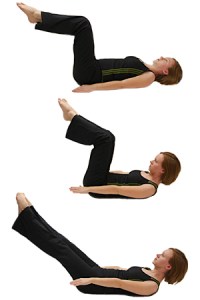
TRY THIS TEST: Sit on the floor. Bend your knees together. Try curling half-way back, scoop the belly, and hold. See if you can completely relax your shoulders and hold the curled position.

If your fall backwards = Your abdominals are weak and the upper body pushes you through most core movements.

If your legs pop up = your hip flexors are tense

If you can hold the position = you should feel deeper core engagement by releasing the shoulders

Roll Down Test (notice how the front of the neck stays open and the knees do not move)

Our shoulders and hips can act like a barrier surrounding the core muscles. To strengthen the core of the body, we must learn to let go of tension. Pilates and muscle awareness helps correct this by building strength from the inside out.

Now back to the upper back! This post simplifies (perhaps overly so) the complexity of the shoulders in order to create achievable goals with a few easy exercises. Besides a tall overall posture, you need awareness of the following muscles to do the movements:

Muscle of interest #1 – The Rhomboids. They pull your shoulder blades together. Imagine cracking a walnut between your shoulder blades, those are your rhomboids.

Rhomboids

Muscle of interest #2. – The Latissimus Dorsi. They connect the upper body to the hips. Imaging drawing you armpits towards the hips, those are your latissimus dorsi. Strengthening these muscles will help allow for a stretch in the upper back and neck.

Latissimus Dorsi

Engaging the rhomboids and the latissimus dorsi (lats) allow neck and shoulder tension to release and that energy to be channeled into shiny new postural alignment.

Try this: Imagine drawing the shoulder blades down and together creating the point of a V at the mid back. Feel the chest stretch open, while constantly allowing your head to drift up towards the sky. This simultaneous contraction and stretch allows for deeper breathing and over all better well being. One note: Don’t force or hold for too long. Gently contract, hold for a moment, then release. Keep at it.

I recommend investing in an elastic band.

Here are 3 elastic band exercises balancing upper body strength, using that tall, core-engaged posture, the above muscles, and while stretching the neck and shoulders:

Shoulder Shrugs: Stand on the band, arms by your side. Shrug shoulders up and down, allowing band to gently stretch the shoulders downward. Head is constantly drifting up towards the ceiling.
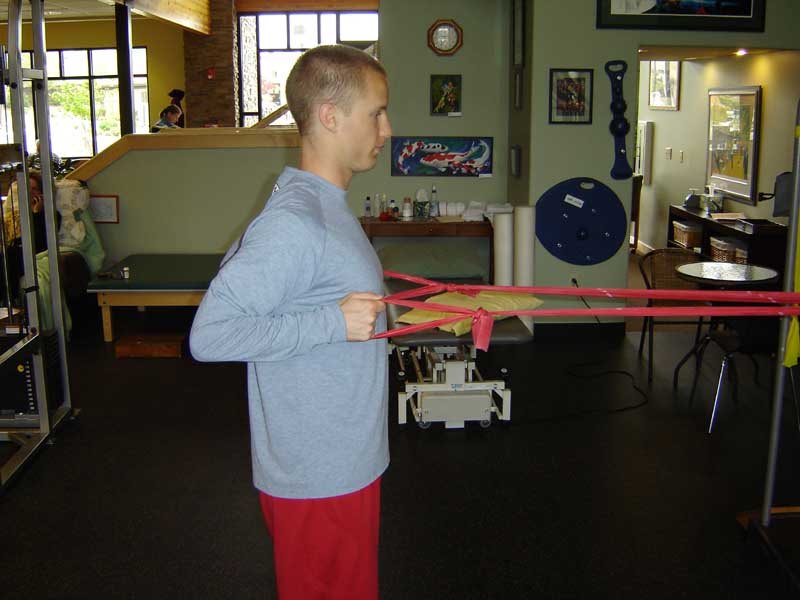
Rowing: Wrapping the band securely around a door knob or fixed point. Lead elbows back towards each other. Head is lifted. Shoulders squeeze back.Crack the walnut between shoulder blades.

Chest Expansion: Wrapping the band securely around a door knob or fixed point. Draw straight arms down and back. Aiming fists towards your heels. Squeeze shoulder blades together. Head drifts upward. Neck is long.

Another small view of chest expansion

More details on these and other exercise can be found at here and here.

A few simple, quality moves with moderate weight (or resistance) and a focus on breath is far better than a massage or a static stretch for releasing neck and shoulder tension. Building proper muscle strength gives the tension a place to live, rather than allowing it to set up camp in your neck a few hours later. Quality of movement is more important than quantity.

Find little movements all day long that create length, strength, and stretch.


The Body Has A Mind of Its Own

Research shows that we not only process abstract thoughts and emotions with our brain, but we use the whole body.

The NY Times today reports on the findings recently published in The Journal for Pyschological Science.

Some of the studies focused on how one might lean forward, ever so slightly, when talking about the future, and hinge back, just a bit, when recalling the past.  Other research watched how people perceive others, whether a warm and friendly personality or a chilly demeanor, while holding onto hot or ice coffee.

You may be able to guess what the findings concluded. Guess we should all drink more warm beverages for world peace.

Death by Sitting.

It’s kind of a “no-duh” moment. The difference being this “no-duh” moment was caught and propelled through the international media circuit.

The AP broke a story last week about the dangers of sitting all day.

Yes. Sitting all day is bad for you.

Thank goodness we have science to back up what our neck, shoulders, back, and brain have been telling us for years.

A little preventative health care goes a long way.

Force the time to get up and move around. Sit on a stability ball at work. Stand up at the desk for phone calls. No doubt since this news garnered national attention, businesses might remind you more often…maybe, but ultimately it’s your health, take responsibility.

Don’t just sit there and read this. Do something.

Quote of the Day

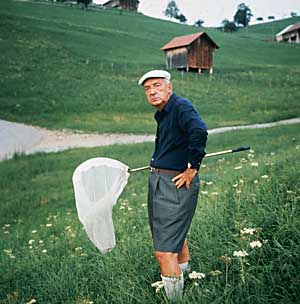
I have always had a number of parts lined up in case the muse failed. A lepidopterist exploring fabulous jungles came first. Then there was the chess grand master, then the tennis ace with an unreturnable service, then the goalie saving a historical shot, and finally, finally, the author of a pile of unknown writings – Pale Fire, Lolita, Ada – that my heirs discover and publish.

Vladimir Nabokov in a 1977 BBC interview

Thought for the Day

“I deal with temptation by yielding to it.” – Mark Twain

I like Fried Candy Bars.

Especially with a scoop of ice cream melting on top. It tastes really, no really good.

Am I gonna stop eating them because they are infinity calories, artery clogging, sugar spiking, and aesthetically unpleasing to the eye? No.

Do I eat them regularly?  No.

Maybe on my birthday. It makes it more memorable. It’s all about balance. Some days, an apple will do just fine…

Welcome to theMindBodyModerate.com

Change is the one thing in human nature we can always rely on staying the same.

The site is the same, we are just evolving.

Themindbodymoderate.com ponders the balance of mental, physical, and spiritual health with a dash of skepticism and not necessarily random rants because come on –  some days the best peace of mind is just getting the dishes done, the best workout is navigating the crowds at the store, and some days the best advice comes from your own gut.

Cheers!

Magic Weight Loss and Brain Power Tips

Yeah, No.

Not really. No magic here. Mentos and diet cola looks pretty magical too, but it’s not. If anyone offers you magic solutions to health, you might as well be buying the Brooklyn Bridge. Has the price gone down on it yet?

There are only habits. Stopping old rituals and starting new routines. Doesn’t that sound daunting? It really doesn’t have to be. Start small. Go slow. Keep steady. Yeah, not glamorous, but it works.

Think Slow and Steady


Invest 10 minutes everyday in a new habit. No more.

Below are a few opportunities to start making changes. Pick only one. Who we kidding, we all want to do more. Go ahead and try a few, but stick to one. If you force too much too soon seeking immediate results, you will crash and burn. If you can keep that one new habit for a 2 months, then perhaps add another. This slow steady method goes a long way in helping maintain better mental and physical health.

  • Just 10 minutes of exercise first thing in the morning can increase your metabolic rate for the rest of the day.
  • Up your consumption of water throughout the day. Drink sugary beverages sparingly.  Be fully hydrated. This can increase your metabolic rate.
  • Eat more fruits and vegetables. Big ugh, I know. Make it more interesting. Go seasonal. Get to know your local farmers. Frequent the farmers market or local grocer. Ask how they like to prepare the harvests of the season. My personal favorite way to eat most veggies is a quick sautee in olive oil, garlic, salt and pepper. Bam.

  • Eat more fats. The good kind. As in HDL, not LDL.  Latest research suggest that cholesterol lowering foods such as avocados, almonds, olive oil, soy beans, garlic, shiitake mushrooms, chili peppers, oat bran, beans (kidney, pintos, black, navy, etc.), onions, fatty fish, and flax seed play a crucial role in lowering LDL and sometimes raising HDL levels. These foods fill you up and help your cholesterol stay healthy.
  • Drink Green Tea. This one is personal.  Although skeptical of touting weight loss benefits, green tea has been helpful in curbing sugar and nicotine cravings.  A little green tea after dinner helps in digestion and is a wonderful winter ritual rounding off dinner with a mandarin orange or two as dessert.
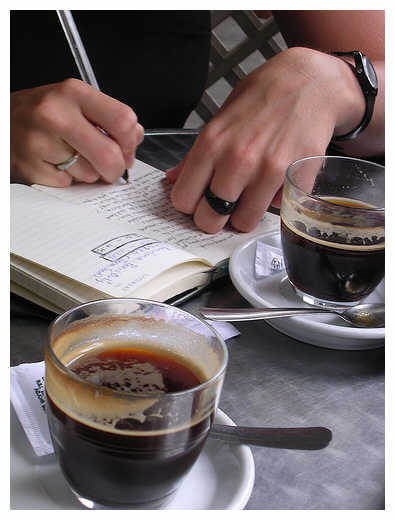
  • Journal 10 minutes a day. Huh? Yup. Get a notebook. Vent your anxieties, frustrations, write down your hopes, dreams. List three thing you are grateful for everyday. These little moments help clear the brain and make the rest of your day smoother, creating peace of mind and less stress.

Take your time and enjoy the process. As enticing as quick fix solutions can be, slow and steady habit shifts will keep the body and mind healthier throughout a lifetime.

Understanding Your Balance Creates Strength Control and Flexbility

711099.widec

You may have heard of the 42 year old Beijing Olympic Swimmer Dara Torres, who attributes much of her training success to resistance stretching. Bob Cooley is one trainer who created a system of movement around this concept, Meridian Flexibility system. Before this in the 1950s the physical therapy concept of PNF stretching was created to help people retrain muscles with isometric contractions followed with passive stretches of muscle to improve range of motion.

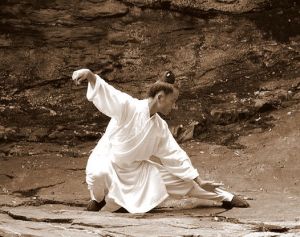
At the early part of the 20th century, Joseph Pilates created his own resistance training method combining Western calisthenics with Eastern movement principles, working from the inside out and elongating muscles outward as they were being contracted simultaneously in order to maintain core stability. Go further, a thousand years or so, and we find the concept of muscular balance and flow, stretch and strength, yin and yang, in movement arts throughout Asia, such as in Tai Chi and yoga.

tai_chi

The idea of stretching and strengthening simultaneously is not new. But it seems to be a hard lesson to learn. Brainpower is a necessity. It requires patience and knowledge of one’s own body. Most of us do not seem to have time to invest in ourselves, although it would reduce injuries and add to our active lifespan.

In my ten years of teaching pilates i have found several truths about people and our bodies.  One in particular is: flexible people love to stretch and tight people like to strengthen. Funny how we do. A very broad example is that it’s very hard to get a runner to slow down, become internally aware of deep muscles and breathe. It’s also a huge challenge to get a yogi to speed up, not to over think, and push their strength training more while forgoing lots of stretches. Part mental, part physical in both cases.

There must be a balance of both stretch and strength, body and mind to create true balance.

In any exercise you do, look for a lengthening, stretching muscle, reach against gravity. Use awareness and gravity to create resistance. If all you feel is a passive stretch, explore the muscles which should be contracting in their length to support the stretch. Don’t just hang out in a stretch! This is what is meant in muscular balance.

Don’t force a stretch, and don’t force a muscle to be in a certain place. These things come with time. Forcing your body (and mind) into place will not create sound balance any sooner. In fact, it might impede it.

Here are two moves, from previous posts, to help you contemplate your own balance.

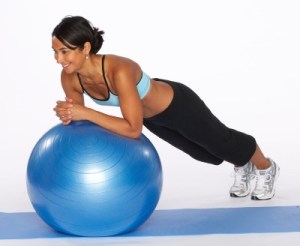
#1. The Forearm Plank ( detailed in Hip strain post)– test strength, learn to release tension in difficult situations and find the stretch. I go to this again and again, but it is a safe test for strength, balance, and control for the entire body.

core-abdominal-and-lower-back-exercises-28

forearm plank(1)

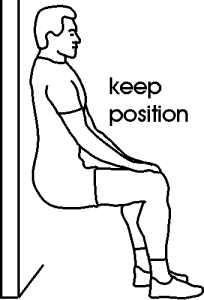
# 2. Wall Exercises for feeling your postural muscles stretch and strengthen ( detailed in Spinal Stability post)

wall squats

The Pelvic Debate – Spinal stability lying Down

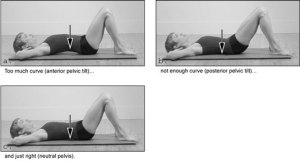
arched, tucked, and neutral pelvic positions

arched, tucked, and neutral pelvic positions

To Tuck or not to tuck? That is the question.

And just like for Hamlet, there is no easy answer. It’s all in your relation to gravity, what movement you are performing, and what kind of weaknesses and spinal posture you have right now.

When performing exercises on your back that require spinal stabilization –  keeping the back still while moving the arms and legs – it is important to learn how to maintain a neutral pelvis and spine. We want to strengthen the natural alignment without force.

To find neutral pelvis, first learn how to isolate and move the pelvic bones by doing pelvic tilts.

pelvic tilt

Lying on the back with knees bent, draw the pelvic bones inward towards your nose, pressing the low back into the floor and slightly lifting the tailbone off the floor. This is called tucking under. Next, go the opposite direction, creating a tunnel or arch with the low back by drawing the pelvic bones downward towards the knees, tailbone connects to floor. This is called arching.

Neutral pelvis is the happy medium between this range of motion. The front two pelvic bones are pointing upward towards the ceiling, most likely creating a slight arch in the low back.The tailbone and the back of the rib cage remain heavy on the floor. To engage the abdominals in this neutral pelvis, imaging trying to zip up the last bit of zipper on your tightest pair of pants! The muscles between the pelvic bones should sink down, but the bones themselves should not move.

(Refer to the picture at the top of the post)

Exercising supine (lying on your back) maintaining neutral pelvis will strengthen and stabilize the spine, allowing the arms and legs to move around freely. Your abdominals gather towards the spine ( like a corset closing in on all sides of the waist, belly and back), but, don’t force down the belly by tucking under the pelvis. Often we confuse scooping the abdominals with tucking under the pelvis.  This will only create bad spinal stability habits in the long run, leading to overdeveloped hip flexor muscles, weak core, and an overstretched low back. The tuck under for stability when lying down will translate to a lordotic low back when standing, or what is called “sway back”.

image025fv3There are always exceptions to every rule. If your back is extremely weak or you have never exercised then modifications must be made. Prop up the pelvis with a small pillow or blanket roll to support weak back muscles when lying on the back. This elevation of the backside will create less pressure directly on the spine and allow you to feel the core muscles. In this case, DO work on keeping the low back heavy and the pelvis tucked under. Given the body’s change in relation to gravity and weakness of the muscles, this works best. As one gets stronger take the prop away and work in neutral pelvis.

Once you’ve found a neutral pelvis position, practice moving the arms and legs while maintaining the stable spinal column.

Look at the “dead bug” exercise in finding your fulcrum.

A good image to help create stabilization would be to imagine balancing a bowl of water ( or a glass of champagne, depending on your preference) on top of the pelvis, just below the navel and between the pelvic bones.

For a more difficult stability challenge, try balancing a tennis ball or golf ball on this same low point in the torso.

Good luck. Once you are able to maintain and understand a correct neutral position, it is surprising how fast one can strengthen their body from the center outward!

Hip and Leg Strain in Pilates

pilates06-1

So you’ve been doing pilates tapes and/or classes for awhile and are at a point where all you feel in many of the exercises are the legs and hips. You might get popping or snapping in the hips. Your lower back might be straining too. Why?

One reason might be that in a traditional pilates mat sequence the beginning exercises are mostly lying supine (on your back) with your legs in the air.

Most people start pilates because they have a weak set of core muscles they want to strengthen.

It is imperative to understand the core is NOT the belly. You cannot look down right now and see your core.

Yes. Your abdominals are part of the muscles that make up your body’s core, but so are many muscles of the torso, including overstretched back muscles, the shoulder stabilizing muscles, and even the back of the thighs, just below the buttocks. The core is more like a long corset wrapped around your entire midsection. Some of these muscles are over-developed, some are under-utilized. Pilates helps find core balance.

Your Core includes many muscles

There is no one perfect exercise that strengthens and stretches all of the core muscles at once.  We need to mix it up. The positioning should be moved around also. If you do all of your core exercises lying on the back with the legs extended upward, ultimately, your core will not be getting stronger. Your hip flexors, the muscles that lift the legs, will, however. If you have strained or tensed hip flexors and quads ( the front of the thighs), they will take over the movement and not allow your core to perform correctly. (The same is true for tense shoulders and neck muscles as well.) Tight hip flexors and gripping in the buttocks go hand in hand…as it were…and overtime can actually compress the low back vertebre and cause low back pain.

Here are a few ideas for finding your own core balance and getting out of leg straining:

#1. If you are feeling leg, hip and back tension in the first part of the traditional pilates mat exercises. SKIP THOSE EXERCISES. Not forever. Just for a few weeks. Focus on some of the countless other exercises that work your core more effectively for you.

Some alternative exercises for overall core strength can be done in their place, such as; forearm planks on a fit ball, careful back extensions, and roll downs against the wall.

#2. If you do the exercises that sometimes strain your legs and hips, keep to the modified versions with the knees bent. Focus on release of the buttocks and thigh tension. (tense and release those muscles a couple of times and they will relax much more easily).

#3. As your center becomes stronger, learn to lengthen and stretch the legs away from your core in the movements. This will release tension as well.

#4. When the legs are outstretched, work on turning out the thighs. This will help you engage the back of the thighs, which help you contract the pelvic floor, which helps you get out of the hip flexor tension…see how it’s a chain reaction!

#5. If you feel popping in the hip socket on some of these back lying exercises, you have 2 options for getting it to stop. (1) Make the movements much smaller and focus on length in the leg rather than width of movement. (2) Squeeze the muscles around the hip to help hold things in place. The hip snapping often occurs in active women who have hip flexor imbalances…too much stretch on one end, too much tension in the other. This can get better if you work bit by bit.

Your ultimate goal is to create tension free, balanced movement. There should be no strain. It take a lot of practice, patience and concentration to move with ease in most areas of life. Slow down, relax and practice. Good luck!

Alternating arm and leg plank

Alternating arm and leg plank